


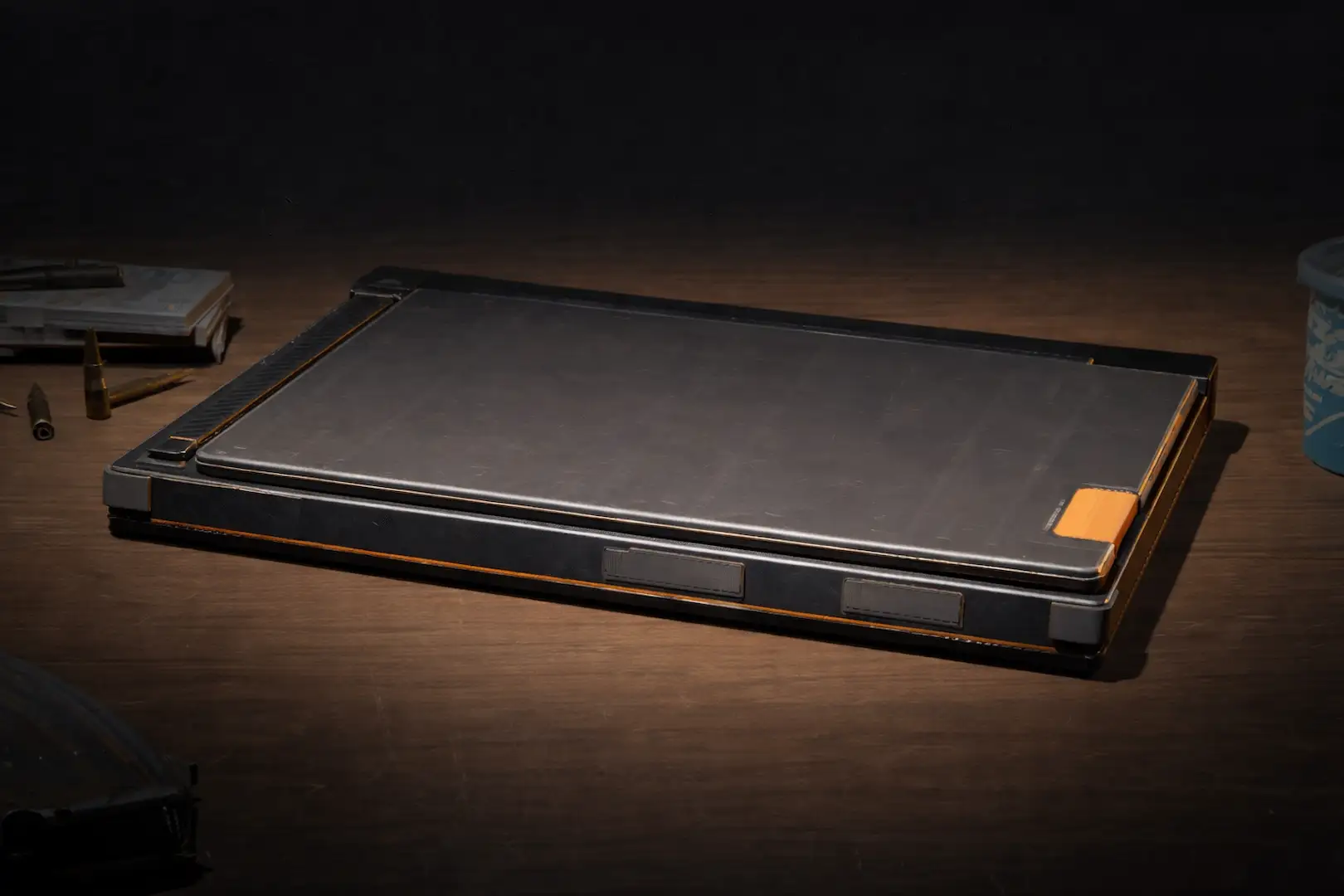
With the introduction of the Dead Hand Terminal in CS2, Valve has made it pretty clear that terminals are likely here to stay — whether we like it or not. Because of that, it’s worth getting used to the idea that terminals might eventually replace traditional cases, either partially or entirely.
To adapt to this change, it helps to understand how terminals actually work and what they mean for players. This guide will walk you through what’s new and answer the most common questions about terminals, so you can better understand the system and get comfortable with how it works.
How Do CS2 Terminals Work?
Terminals can be unsealed for free. Once opened, the Arms Dealer presents you with skin offers one by one, each with its own price. It works similarly to a Deal or No Deal game — you can either accept an offer and buy the skin or decline it. You can receive up to 5 offers, and if you decline the fifth one, the terminal is removed from your inventory.
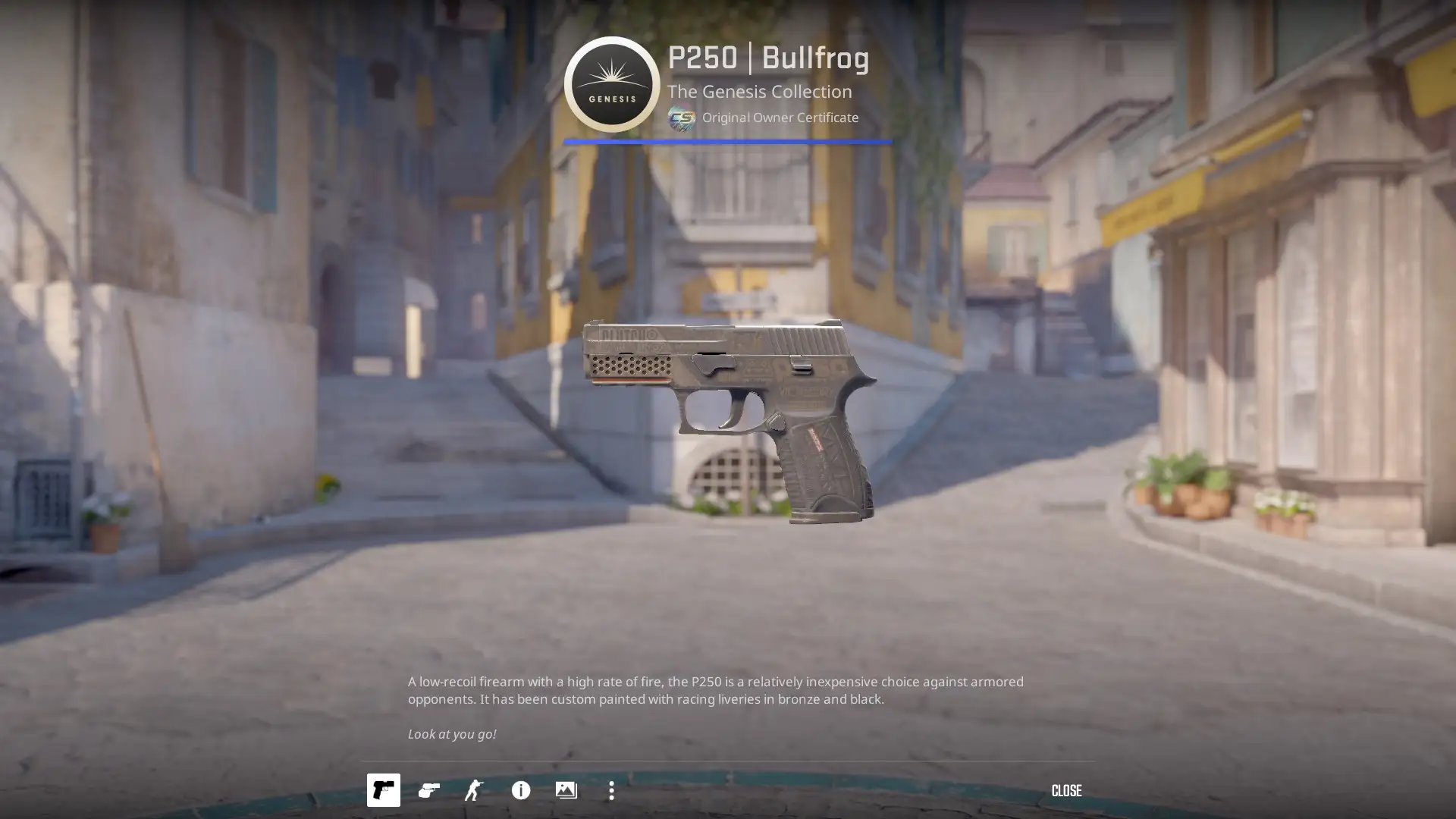
When you purchase a skin from the terminal, you also receive an Original Owner Certificate for it. The certificate remains attached to the skin while you own the item and disappears once it is traded away. It is visible when browsing your inventory or previewing the item, where it appears just below the collection name. Personally, I find this feature somewhat unnecessary, but it’s still worth mentioning since some people might think it’s cool.
How expensive are the skins in CS2 terminals?
Prices for items offered through CS2 terminals are global and automatically adjusted based on the demand for each item within a collection. Although the exact algorithm used by Valve is not public, the community has identified several factors that influence a skin’s price:
- Rarity of the skin (blue, purple, pink, red, or gold)
- Demand for that specific skin: Valve has confirmed that demand is taken into account. They appear to track how often players accept offers for a particular skin and at what price, adjusting future offers accordingly. Because of this, it is technically possible for a blue skin to appear more expensive than a purple one.
- Condition of the skin: newer conditions are generally more valuable (Factory New, Minimal Wear, Field-Tested, Well-Worn, Battle-Scarred).
- Exact float value: even skins with the same condition can have different prices depending on their float. For example, a Field-Tested skin with a float close to the lower boundary (e.g., 0.16) may be more expensive than another Field-Tested skin with a higher float (e.g., 0.35).
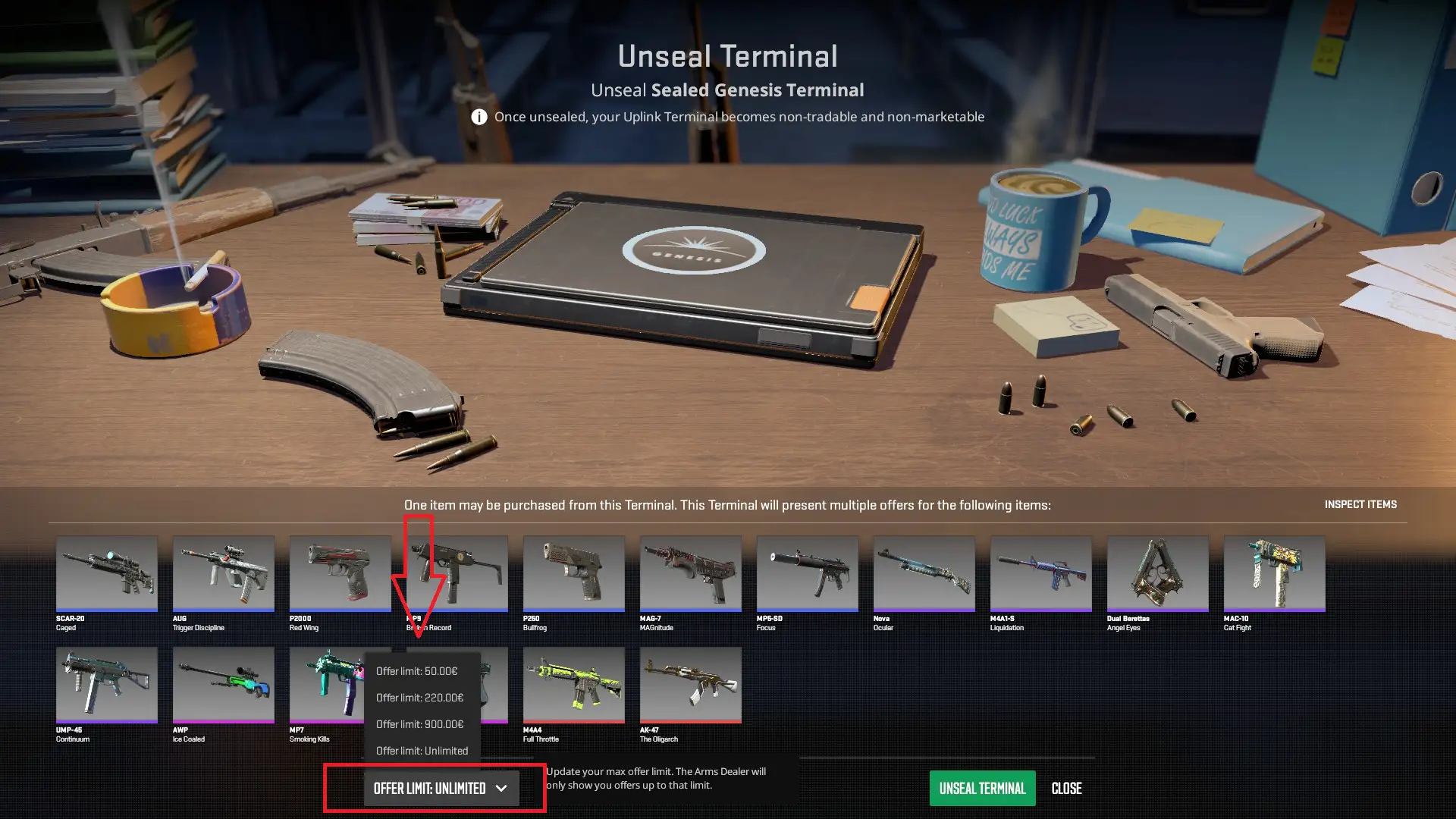
The maximum price for a skin offered in CS2 terminals is €2000, which corresponds to the maximum balance allowed in a Steam account. On March 6, 2026, Valve also added the ability to set a maximum price limit for items in the Terminal. When this option is used, the Arms Dealer will only present offers up to the selected limit. However, it’s not as simple as setting a very low limit to receive many cheap items.
Before unsealing a terminal, you can choose the maximum offer limit from four options: €50, €220, €900, or Unlimited, as shown in the image below. If you select one of these limits, the offers you receive will not exceed that value. The Unlimited option means offers can go up to the maximum Steam balance limit of €2000.
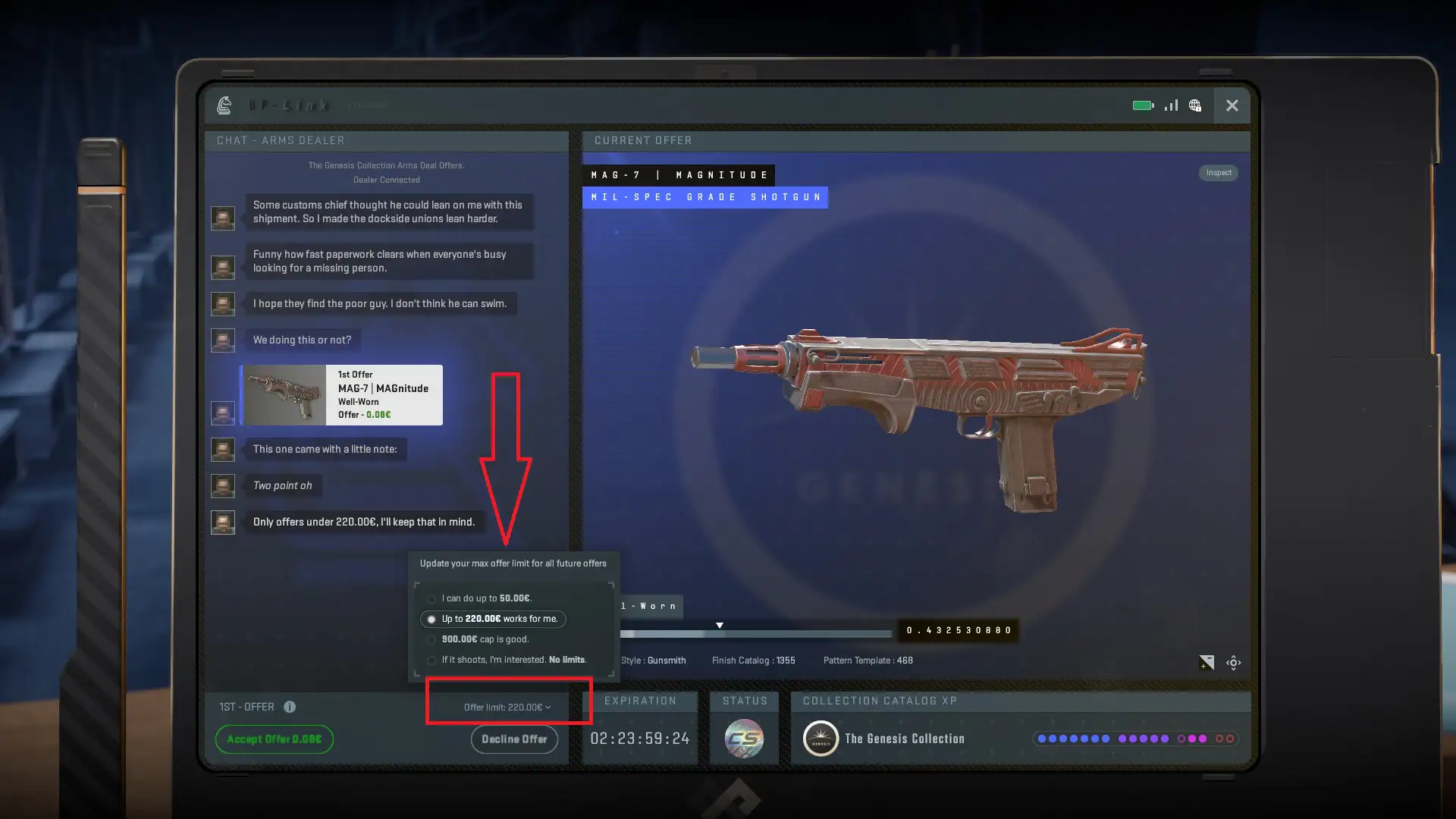
You can also change the maximum offer limit after already receiving offers from the Arms Dealer. When you do so, the prices of the subsequent offers will adjust to match the newly selected limit, as shown in the example below.
Can you get bonus XP from unsealing CS2 terminals?
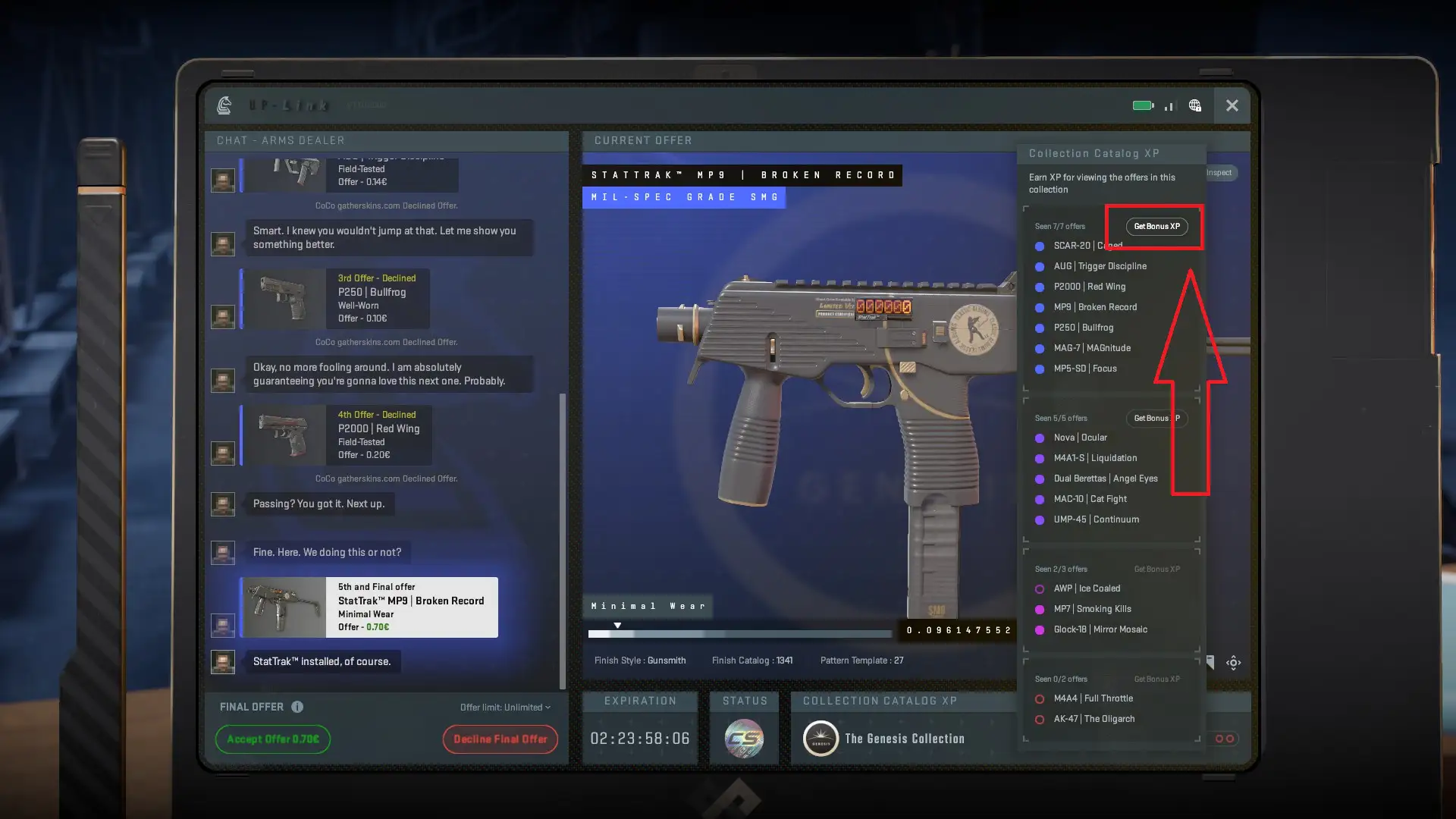
Yes, you can earn bonus XP from unsealing CS2 terminals. For each collection available through a terminal, you can receive 5,000 XP (roughly one rank-up for your medal) after viewing offers for every item within a specific rarity tier of that collection — for example, all blues.
For gold items, the requirement is different: you don’t need to receive an offer for every individual gold in the collection. A single offer for any gold item is enough to complete that tier.
In total, you can earn up to 25,000 XP from terminals such as The Dead Hand Terminal, which include gold items. For terminals that do not contain golds, such as The Genesis Terminal, the maximum is 20,000 XP.
You don’t need to accept the deals to receive the XP — simply viewing the offers is enough, and they can come from multiple terminals of the same collection. Once you complete a rarity tier and receive the XP for it, you can no longer earn additional XP from viewing items belonging to that specific rarity.
How to redeem the bonus XP from CS2 terminals?
In the bottom-right section of the terminal UI, you will find the Collection Catalog XP box. Click the small menu with the rarity bubbles (the colored circles representing skin rarities):
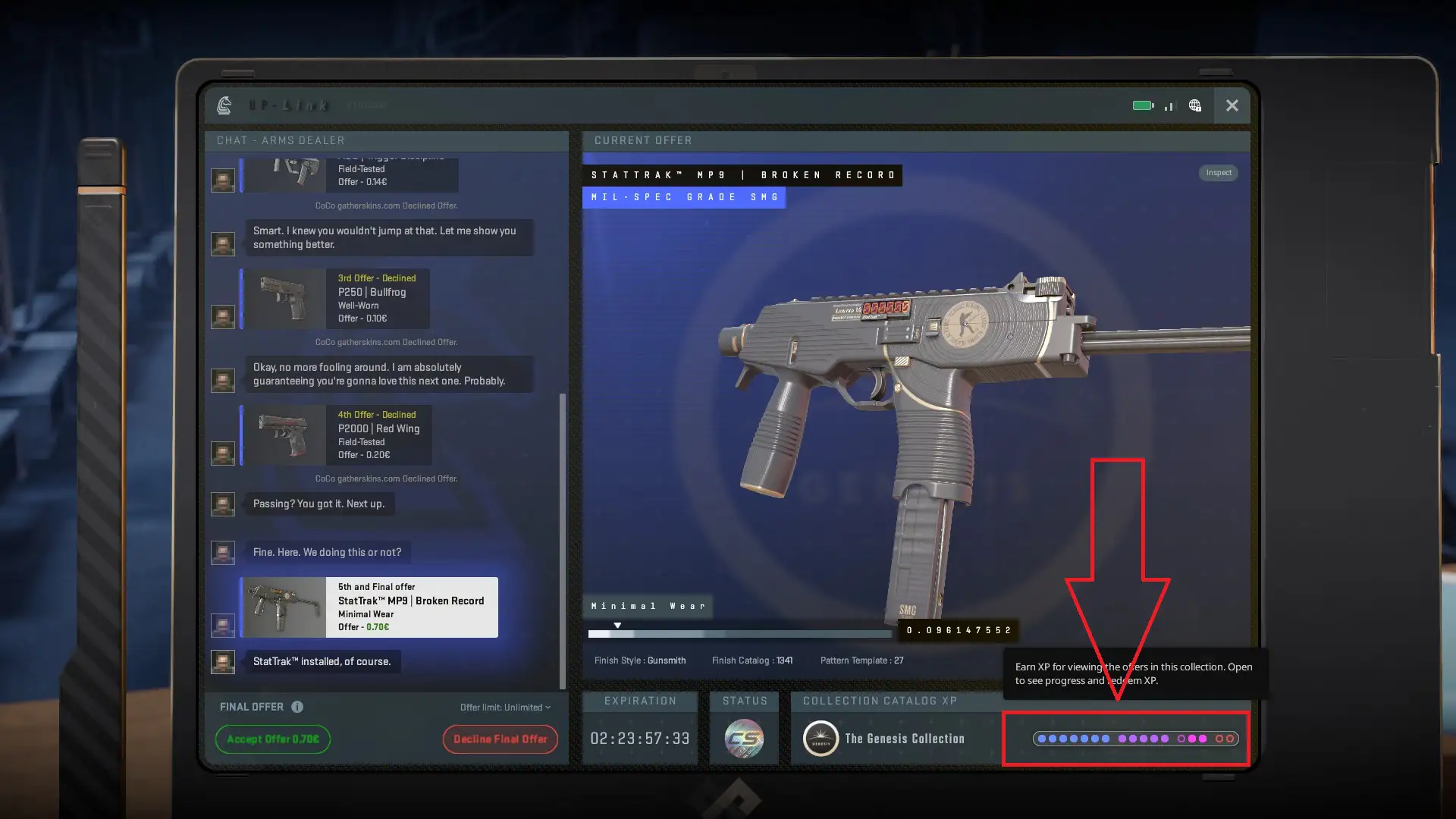
This will open the Collection Catalog XP pop-up, where you can view all skins in the collection organized by rarity and see whether you’ve already received an offer for each one. After you’ve received offers for every skin within a specific rarity tier, you can click the Get Bonus XP button to claim your 5,000 XP reward.
What are the odds of each rarity in CS2 terminals?
The odds of receiving an offer for a specific skin in CS2 terminals depend on the item’s rarity and follow the same probabilities as case openings (for a single offer from the Arms Dealer, not the entire terminal):
- Blue: 79.92% (~4 out of 5 offers)
- Purple: 15.98% (~1 in 6)
- Pink: 3.2% (~1 in 31)
- Red: 0.64% (~1 in 156)
- Gold: 0.26% (~1 in 385)
Additionally, there is a 10% chance that the item offered is StatTrak, which further divides the probabilities above.
However, since the Arms Dealer can present up to 5 offers from a single terminal, the probability of seeing a certain rarity within those offers is significantly higher. If we treat each offer as an independent roll using the probabilities above and repeat it five times, the approximate chances of seeing at least one item of a given rarity in a terminal become:
- Blue: 99.97% (meaning almost every terminal will contain at least one blue offer)
- Purple: 58.1% (~1 in 2 terminals)
- Pink: 15.0% (~1 in 7)
- Red: 3.16% (~1 in 32)
- Gold: 1.29% (~1 in 77)
Are CS2 terminals worth opening?
In most cases, probably not. It largely depends on the specific offers you receive, but based on my personal experience unsealing terminals, the prices offered by the Arms Dealer tend to be very close to the Steam Market price of that same item. When you factor in the cost of the terminal itself, or the fact that you could simply sell the terminal if you received it as a weekly drop, opening it often ends up being a worse deal than just buying the skin directly from the market.
This comparison is already based on the Steam Community Market, where prices are usually higher. On third-party marketplaces, the same skins are often 20–30% cheaper, making the terminal offers even less attractive. Because of this, I would generally recommend selling the terminals you receive from weekly drops and using that money to buy the skins you actually want instead of unsealing them.
The Dead Hand Collection and Terminal. What is different?
Valve introduced the Dead Hand Collection on March 11, 2026, featuring 17 weapon finishes created by community artists, along with 22 brand-new glove skins.
Some of the skins featured in this collection really stand out, with the covert AWP | Queen’s Gambit being one of the most eye-catching. Its elegant design and gold accents give it a luxurious feel that almost reminds me of the AWP | Gungnir. Another standout is the AK-47 | Crane Flight, which has a Japanese-inspired design. The white and grey base combined with a red circle on the stock of the weapon makes it resemble the Japanese flag. Even the USP-S | Silent Shot, which is technically a blue-tier skin, looks detailed enough that it could easily pass as a higher rarity.
Items from the new collection can be obtained through the Dead Hand Terminal, which works similarly to the Genesis Terminal. The key difference, however, is that the Dead Hand Terminal can also contain a rare special item — something the Genesis Terminal didn’t have.
This is a big deal because it makes the Dead Hand Terminal the first terminal that includes gold-tier items. Since rare special items are usually what attract players to open cases in the first place, it will be interesting to see how their presence affects the demand for opening terminals and the prices of the skins.
What does this mean for the future of cases?
Ever since the Genesis Terminal was released six months before the Dead Hand, players started speculating that Valve might be trying to move away from traditional cases and introduce a system that feels less like gambling. That speculation gained even more attention after reports surfaced that New York Attorney General Letitia James had filed a lawsuit against Valve, accusing the company of promoting illegal gambling through loot boxes in games such as Counter-Strike 2, Dota 2, and Team Fortress 2. The lawsuit argues that paying for keys to open randomized cases — where players receive items of uncertain value — resembles slot-machine gambling, especially because those items can later be traded or sold for money.
Shortly after the reports appeared, Valve published a short statement responding to the situation. In the statement, the company argues that loot boxes function more like cosmetic collectibles, comparable to trading cards, rather than gambling. Valve also emphasized that it has taken steps to combat fraud and third-party gambling websites. Additionally, the company stated that some of the requests from the New York Attorney General — such as restricting item trading or collecting additional user data for verification — could negatively impact user privacy and digital ownership. Valve added that it will only implement changes required by proper legislation, rather than informal regulatory pressure.
However, there is still concern that this time Valve may not be able to avoid making changes. Because the NYAG reportedly approached the company as early as 2023 and discussions have been ongoing since then, it’s possible that Valve has already been preparing alternative systems in case adjustments become necessary.
Terminals could be part of that preparation. With terminals, players know exactly which skin they are paying for, making it much harder to argue that the system resembles gambling. Even though the offers provided by the Arms Dealer are random, players are not paying for a randomized reward in the same way they do when opening cases. In addition, players can receive terminal access through in-game drops, meaning they don’t necessarily have to pay anything to obtain offers.
Still, Valve’s long-term strategy remains unclear. At this point, it’s uncertain whether the company plans to stop releasing new cases altogether or continue supporting both systems. It’s possible that terminals are still in a testing phase, even for Valve itself, and that the final direction hasn’t been decided yet.
If Valve does decide to move further toward terminals and gradually phase out cases, there are several directions they could take. One option would be to slowly introduce more terminals while still allowing older cases to be opened in regions where cases are not restricted. In countries with stricter regulations, Valve could offer alternatives such as the X-Ray Scanner system, similar to what was recently introduced in Germany. Another possibility is that cases could eventually be replaced by terminal versions tied to the same collections, either in specific regions or globally. For now, however, only time will tell how Valve approaches the situation and whether traditional cases will remain part of the game in the long run.